
Toyosu Confidential
Where Tokyo's best sushi is decided, hours before anyone sits down

The carts almost got me twice before I understood the rule: at Toyosu you keep moving, and you keep your eyes up. The turret trucks, the same flat-bed ターレ that rolled over from old Tsukiji, don’t slow down for anyone, least of all a Brazilian standing in the wrong aisle with a camera.
You learn the choreography or you become an obstacle.
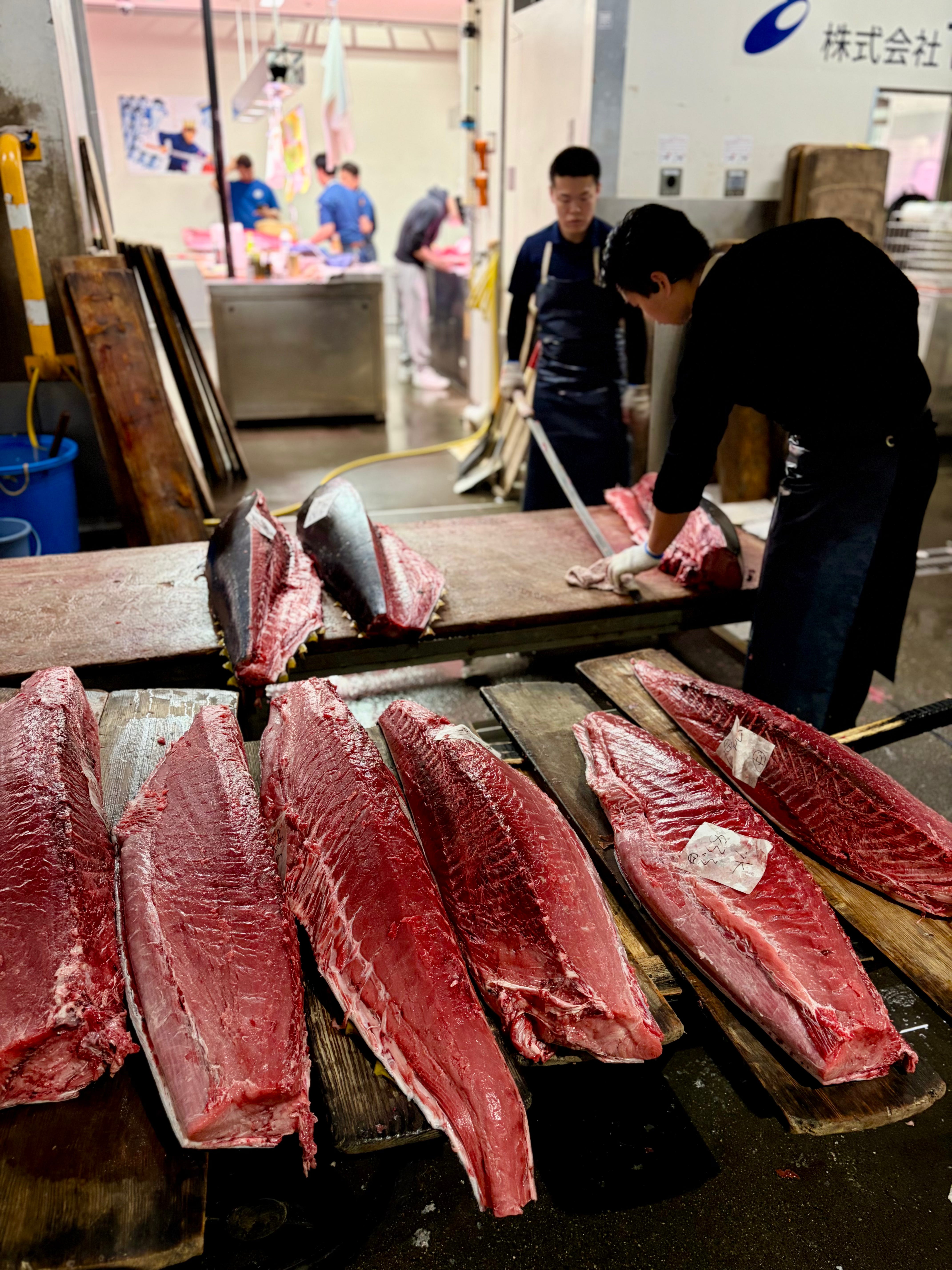
Tsukiji closed in October 2018 after eight decades, and the inner wholesale market moved here, to a sealed, climate-controlled building on a man-made island in Tokyo Bay. Tourists mourned the romance of the old place. The people who actually buy fish mostly just got back to work. This is the kitchen behind the kitchens.
I came in through a fixer who is close to Sugita’s supplier, which is the only way a room like this opens up. The first thing you notice is how little the chefs technically need to be here. The top wholesalers understand each client’s work to a degree that borders on intimacy: the acidity of one chef’s rice, how firm another likes his cuts, who wants leaner fish this time of year, and who will pay anything for fat. They aren’t selling tuna so much as casting it, matching each piece to the specific stage it will perform on. A chef could phone in his order and trust the house to get it right.
But they come anyway. Sushi masters are up before dawn, walking these wet aisles like regulars at a neighborhood bar. They come to talk and to be seen, to put a hand on the fish and trade a sentence of feedback that no order form could carry. Two links in the same supply chain, over-communicating on purpose.
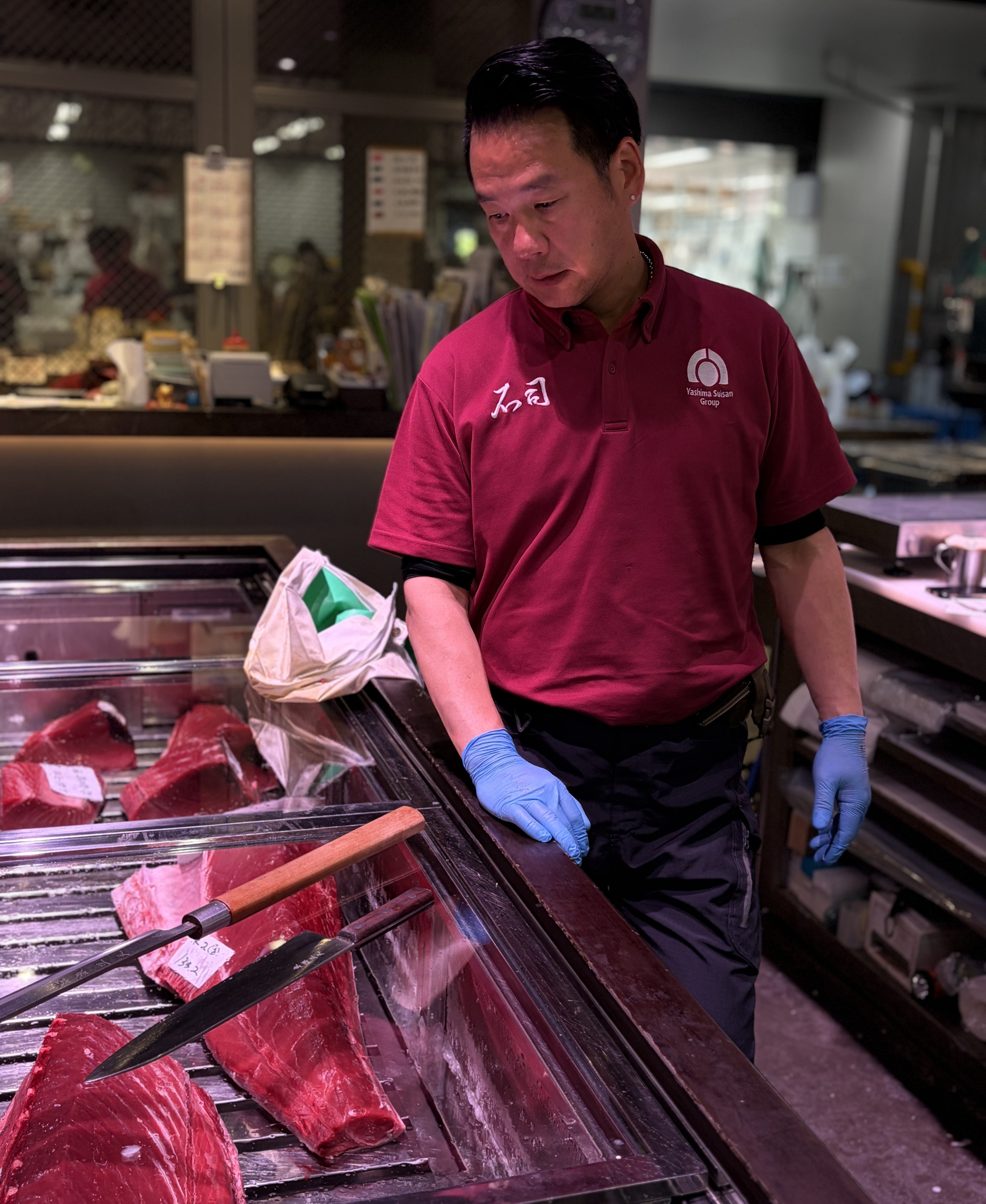
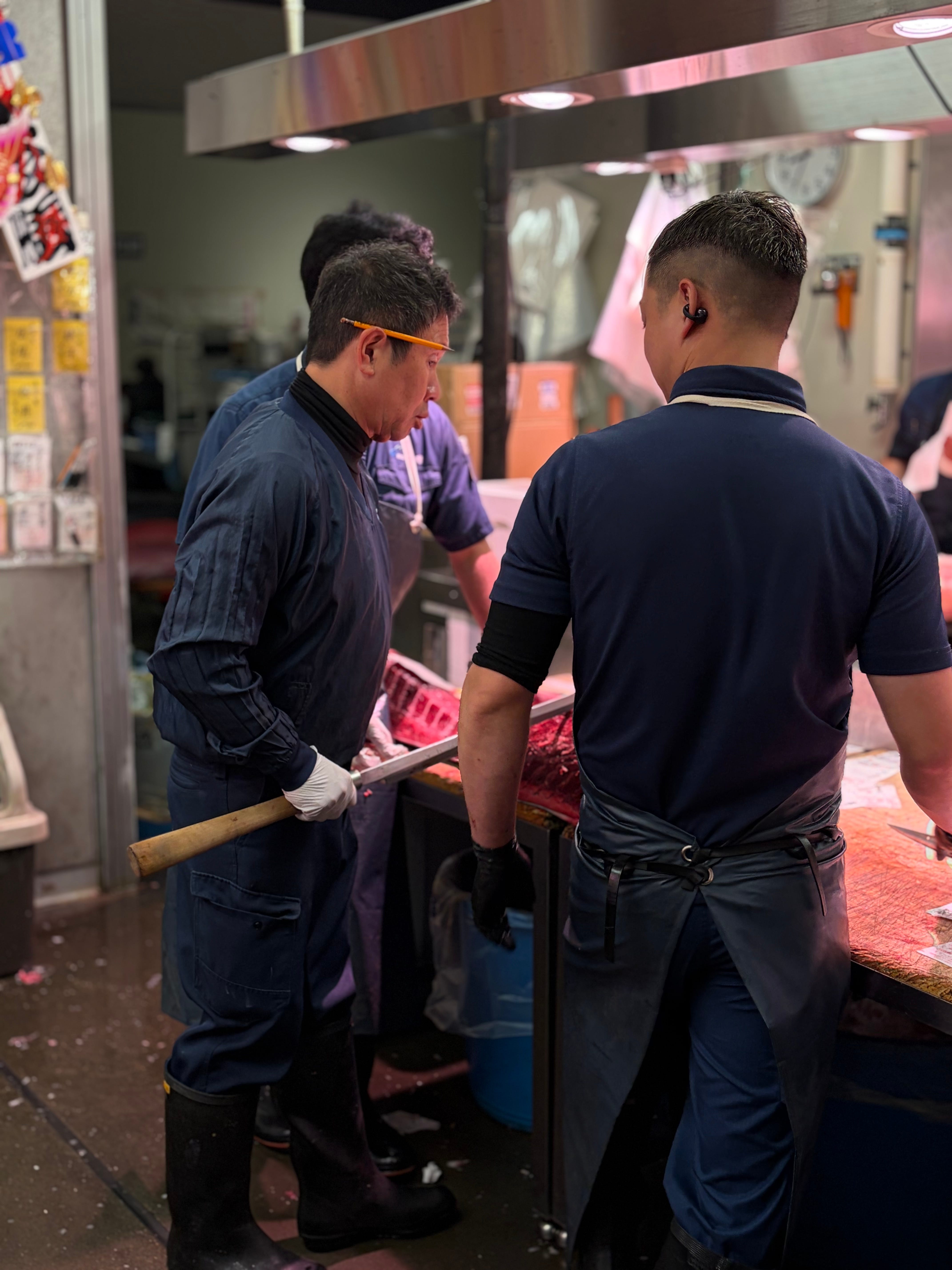
Nowhere is that clearer than at the Yamayuki stand, all yellow signage and decades of reputation, where Yukitaka Yamaguchi, the man Tokyo calls the tuna king, was holding court with a pencil behind his ear. The work in front of him and Kubono, his right hand, sounds simple and is anything but: deciding how each block of tuna gets divided across an order sheet crowded with restaurant names, which loin, which cut, which house. He, Kubono and a third man, Koyo Onda, orbited the question in a loop with no visible beginning or end. They talk, they stop. They cut a piece. One takes a phone call. They come back and pick up the argument mid-sentence, in a register I’ll never decode. Someone is told to throw water across the floor, and the cycle restarts. I waited a long time for the scene to resolve, for a verdict, a handshake, anything. It never did. Eighteen tuna entered Yamayuki’s books that morning, and the conversation just rolls from one fish to the next, every day, forever.
The freshest tuna isn’t necessarily the best tuna; a great cut wants days of rest before it goes anywhere near rice, and the wholesaler holds each fish until its moment. The calendar talks too. From spring into summer, after spawning, bluefin lose some of their fat and turn slightly watery, so the team blots the cut surfaces with kitchen paper, drawing the moisture out sheet by sheet. And a fish that fought too hard on the line can overheat from the inside, a burn the Japanese call yake. The ice, the speed, the carts that won’t stop for me: all of it is a defense against time moving faster than the fish.
The tuna king’s leftovers, by the way, go to his dog. Yamaguchi swears the diet cured the dog’s teary eyes, and who am I to argue with the best tuna palate in Japan. Somewhere in Tokyo there is a dog eating better bluefin than most of us ever will, and apparently it has never looked happier.
Tuna is the headline act here, but the aisles hold quieter masters. One vendor is beloved by chefs for everything tuna is not: the small silver-skinned fish, the shellfish, the shrimp. I watched him work through a crate one piece at a time, lifting each fish, turning it, deciding. This pile passes, this one doesn’t. Nobody was watching him, no client was waiting, and the sorting went on with the same care anyway, on fish that cost a hundredth of what Yamaguchi’s tuna fetch. At Kaihou, the uni house whose trays of Hokkaido sea urchin travel to restaurants around the world, the man behind the counter barely smiled the entire time. With product like that, I suppose the uni does the talking.
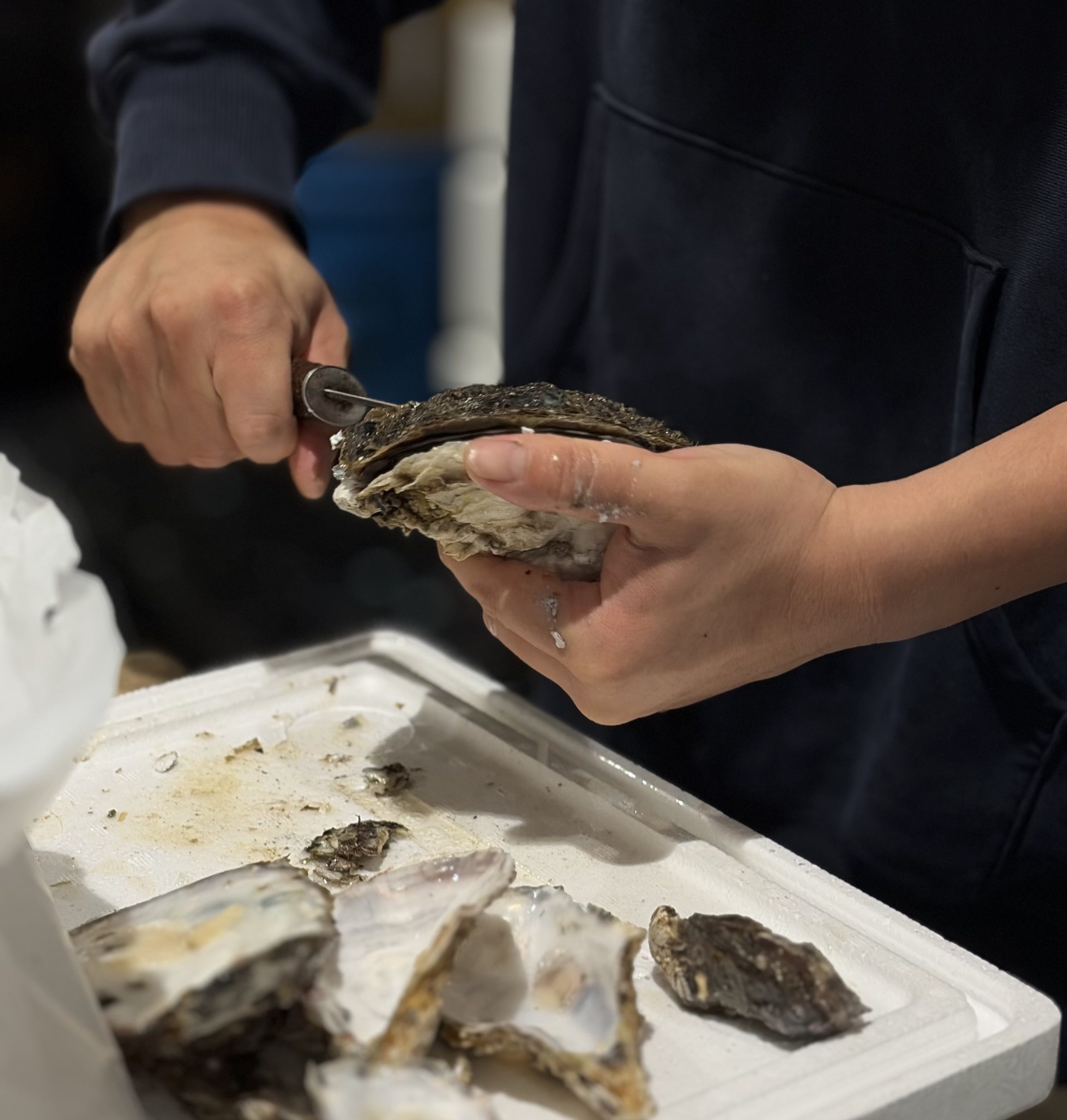
My turn to eat came at the shellfish corner, at the very end of the market. Takahiro Kimura, an oyster expert who also consults on oyster farming, walked me through two Pacific oysters raised by different cultivation methods and one giant rock oyster, shucking them right there as I ate standing up, leaning on his styrofoam box. The giant one defeated my technique entirely. There is no elegant way to eat an oyster that barely fits in your hand, so I didn’t try.
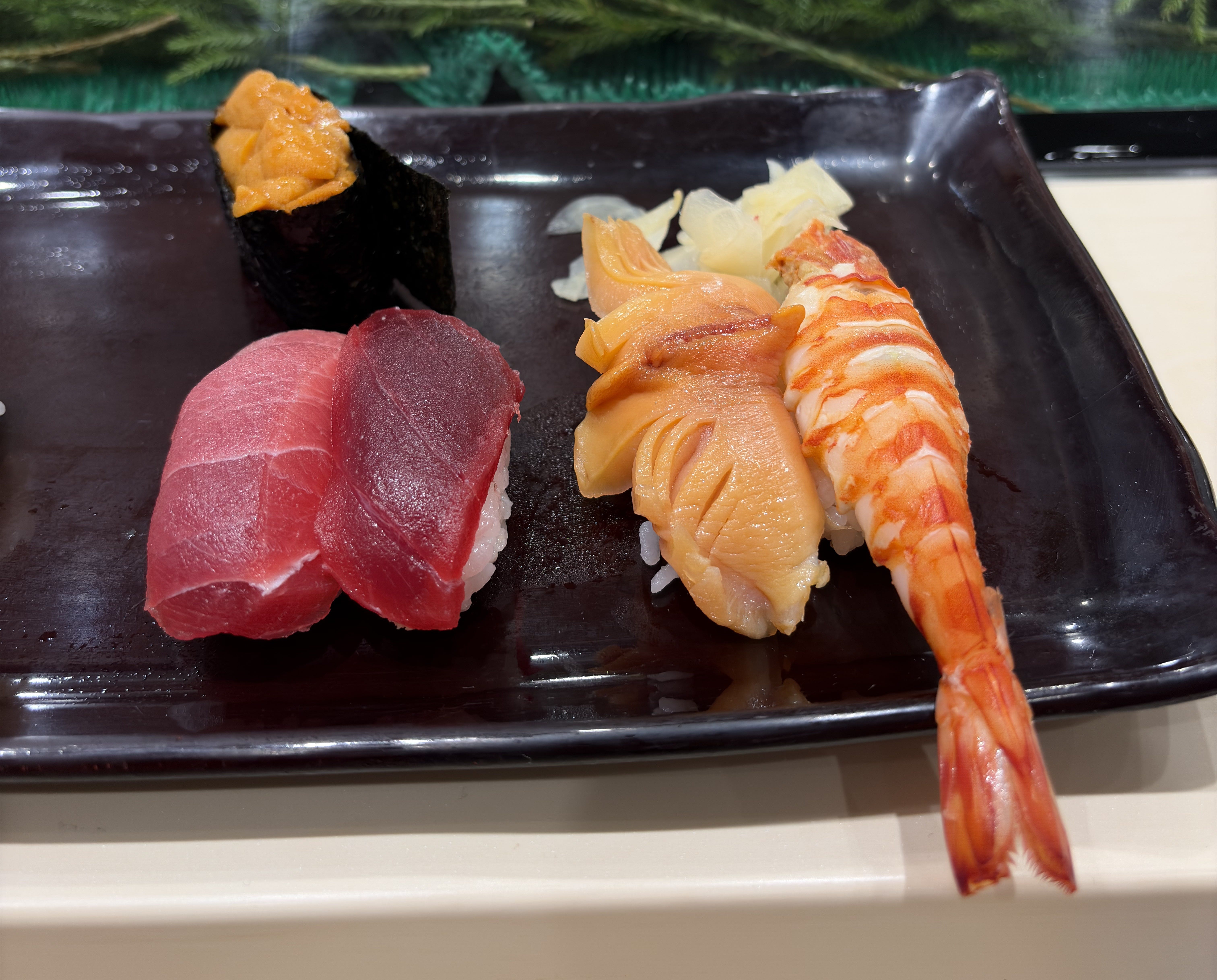
I left the only way that made sense: Iwasa, a sushi counter that followed the market over from Tsukiji, where the day’s fish comes from the aisles I had just walked, and the market’s own workers eat alongside you from 5:30 in the morning. Nigiri, assembled in front of me, fish at its exact right moment. I'm told plenty of sushi chefs eat here too. Somewhere below, the carts were still running, the water still hitting the floor, Yamaguchi’s loop still going. I will never know which stall my breakfast came from.
Once of a lifetime experience to witness this from the frontlines
What an incredible experience! Did you have to book ahead of time? I went to the old market in 2016 but wasn’t up early enough to catch the auction.
My dog would love being fed yellow fin tuna! How lucky