
We Talk After Dinner
On beef, forty days of patience, and a chef who doesn't need English to make you feel welcome

Two questions in, chef Yoshitaka Oka smiled, raised a hand, and typed into his phone: we talk after dinner.
Fair enough. There were eight of us at the counter and one of him, and my curiosity about the aging and the glass-fronted fridge behind his back wasn’t going to cook anyone’s steak.
Gion Nikuryori Oka hides in a converted machiya one lane off Hanamikoji, the street of teahouses that fills every Kyoto postcard. Inside: a counter cut from a single slab of bubinga wood, eight seats, a pocket garden of moss and pebbles. And that fridge.
Behind the glass, whole cuts of beef rest on the bone, the newest arrivals still bright pink, the oldest crusted almost black. The house says the aging runs forty days or more, and the meat is cut from the bone only minutes before it meets the fire: black charcoal of ubame oak, the same dense wood used for binchotan. Oka calls himself a nikuyakishi, something like a meat-firing craftsman, and serves a kaiseki meal where beef, rather than fish or vegetables, carries almost every course. Oka is solidly built, gray hair swept back behind an architect’s glasses.
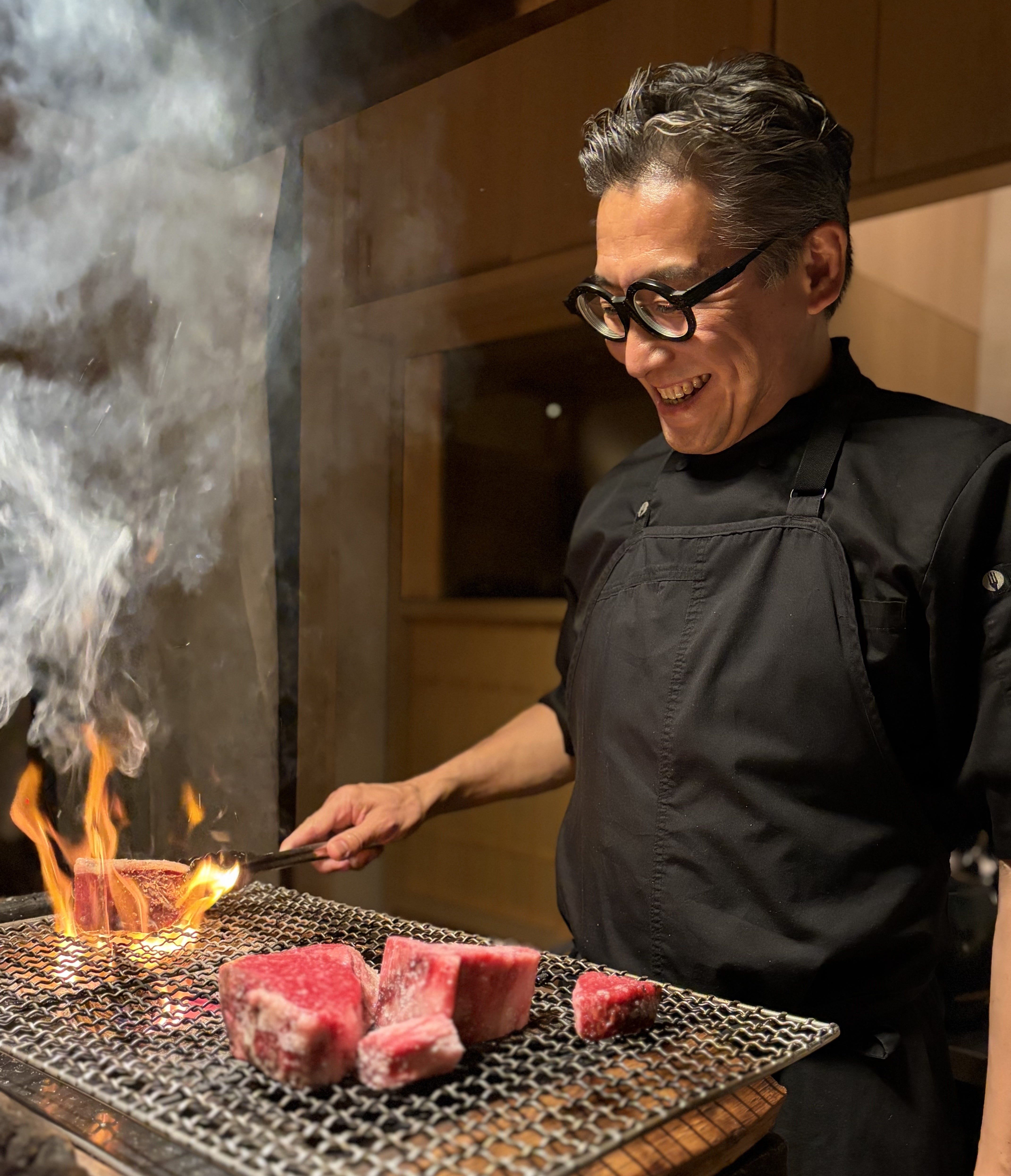
Japan has no shortage of counters that exist, in practice, for Japanese guests: introductions required, booking systems in a language you don't read, a phone number you don't have. Oka speaks almost no English and has built the opposite. Foreigners arrive every night, and he receives them the same way he received me: arms open, gaps in vocabulary filled with gestures and a translator app.
He never planned to land here. His first dream was a yakiniku restaurant; instead he fell into Italian cooking and ran Italian restaurants for over two decades, dry-aged beef slowly taking over the menus, until the pandemic forced a decision: meat cuisine, he told me, for the rest of his life. The Italian years don’t vanish. A ragù arrives spooned over charred Kamo eggplant, in season. In a platter of small bites he calls, with no irony, his antipasto: a fried ball of sake rice, house bresaola, corn dusted with sansho pepper, roast beef, a slice of Kobe beef draped over rice like nigiri. It reappears in a sukiyaki sharpened with balsamic vinegar, that night built around mushrooms, onions and tomatoes.
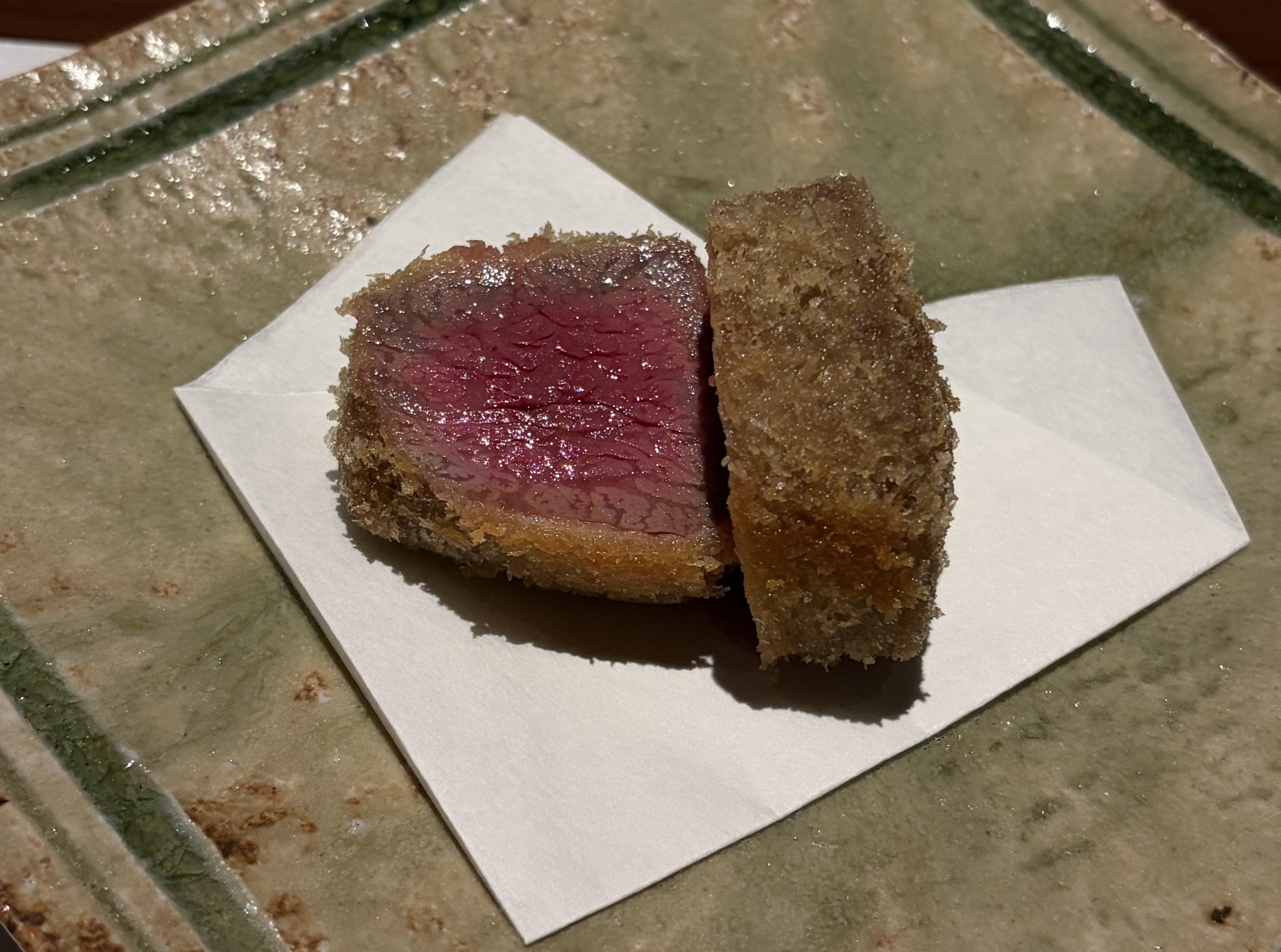
The tartare opened the meal, as it has since opening day: aged beef chopped fine, folded with onions cooked down in the rendered fat of that same beef, a Kyoto pickle cutting through with acidity. The dry age was there from the first bite, deep and slightly funky, still on my tongue seconds later. Later came a chateaubriand katsu, breaded and fried, the crust deep brown around a nearly raw ruby center, then a clear broth of kelp and tuna to reset the palate before the main event.
The aging announced itself in the nose before the palate, something nutty, closer to a cellar than a butcher shop. The steaks came as a progression, marbled first, lean second. No melting-on-contact theatrics. There was chew here, actual texture, char at the edges, and a long beefy finish that reminded me less of anything labeled A5 and more of Korean hanwoo. Wagyu built its reputation abroad on tenderness, on beef so yielding it barely registers; forty days of aging gave this one somewhere to go after you swallowed. Alongside, wild Kyoto herbs dressed in a lactic acidity drawn from beef broth.
Which brings me to the question that had to wait. I had eaten beef for three hours and felt none of the heaviness that usually follows. After service, phone out, translator open, Oka walked me through it: the fat of his Kobe beef starts clean, a result of the feed his producer, Mr. Nishizawa, gives the cattle; aging refines it further; the charcoal renders the excess during cooking; and the course itself is calibrated, lean against fat, from first bite to last. How much of that can be measured, I don’t know. After three hours of beef, I walked out lighter than I had any right to expect.
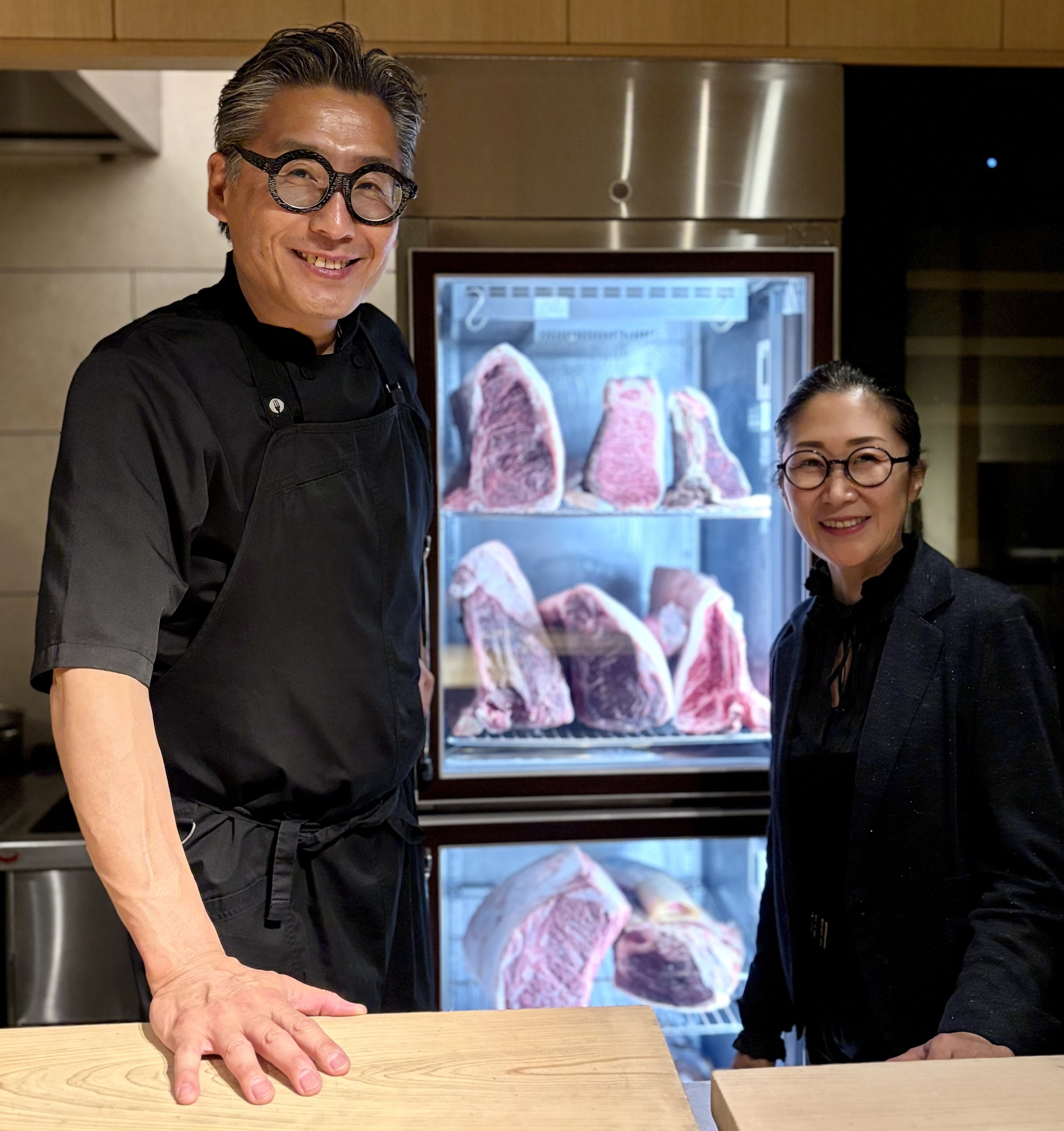
That conversation stretched on while his team cleaned around us; my two questions had turned into twenty. His wife Miyuki joined in: a full head shorter than him, wearing the same round glasses, married to him for 28 years and running the room while he runs the fire. At some point Oka offered me a drink, on the house, and said a few words in Japanese to the team. A gin and tonic landed in front of him; in front of me, a glass of white grape juice, because someone had noticed I hadn’t touched alcohol all dinner. The three of us sat there passing the phone back and forth, writing questions and answers into a translator app, laughing at what came back. When I finally stepped out into the lane, Oka came to the door and stayed there, watching, until the street curved and Gion swallowed me.
You captured this moment so beautifully. I felt like I was sitting in the restaurant with you.
What an incredible experience. Japan is a special place for me, I’ve been there a three times now and always have a pull to go back for moments like these.
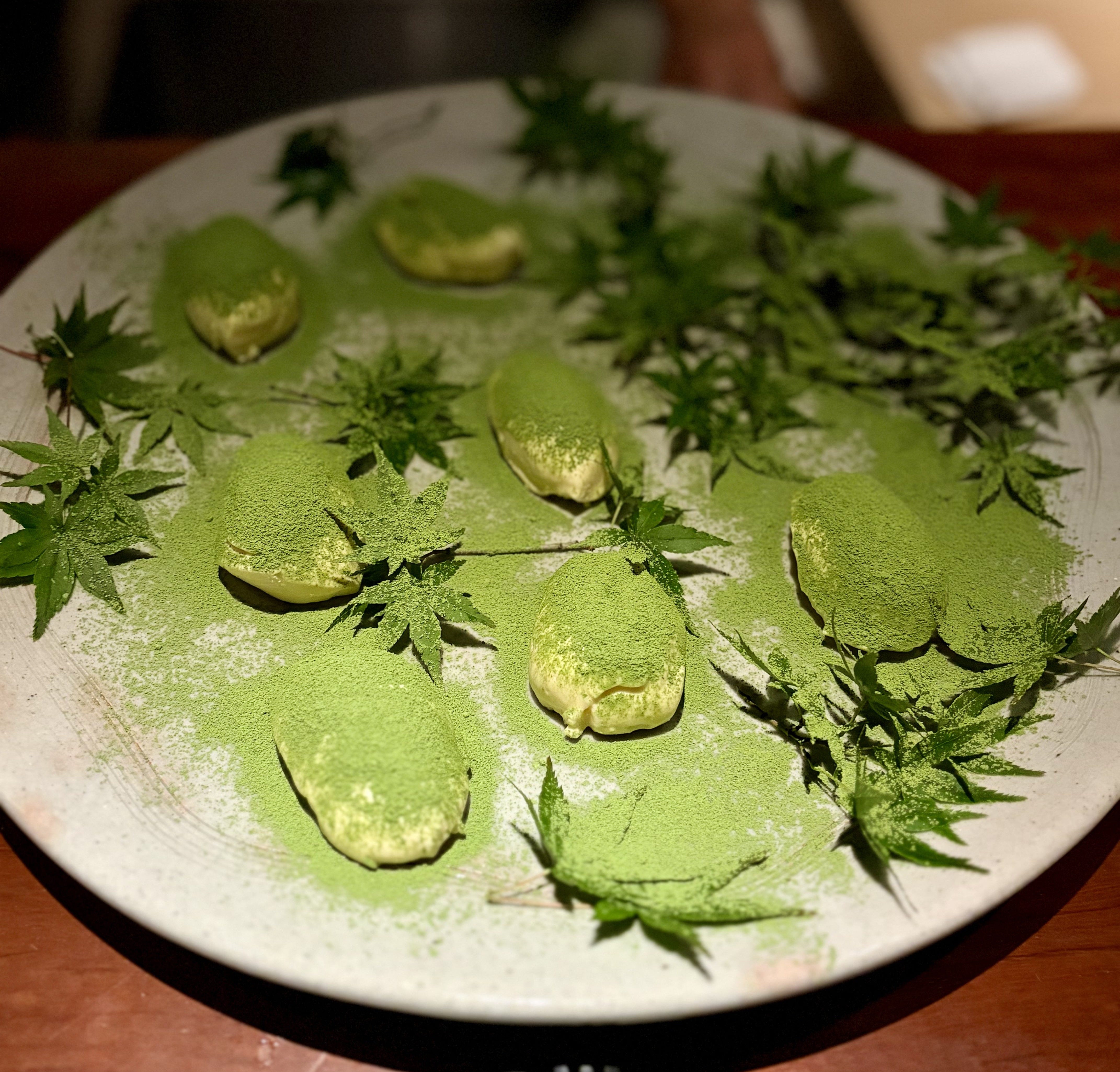
I like your article and experience. I hope you get even more of them! What is the meal on last photo, please?