
Midday Diner
A packed standing bar at 2:37 on a Monday, two floors below Osaka Station.

The clock behind the counter at Ginzaya read 2:37 on a Monday afternoon. The place had been open for barely half an hour, and there wasn’t a free table in the house.
Across Japan, izakayas kept turning me into a participant. I watched Ohtani bat on muted TVs with strangers, traded toasts over bottles of lager, answered more than once the delighted question of what a Brazilian was doing in somebody’s favorite neighborhood bar. That last part took me a while to understand: Japanese drinkers are loyal to their izakaya the way people back home are loyal to a football club. They go to the same one, stand in the same spot, and a foreigner showing up in their territory is less an intrusion than a small event.
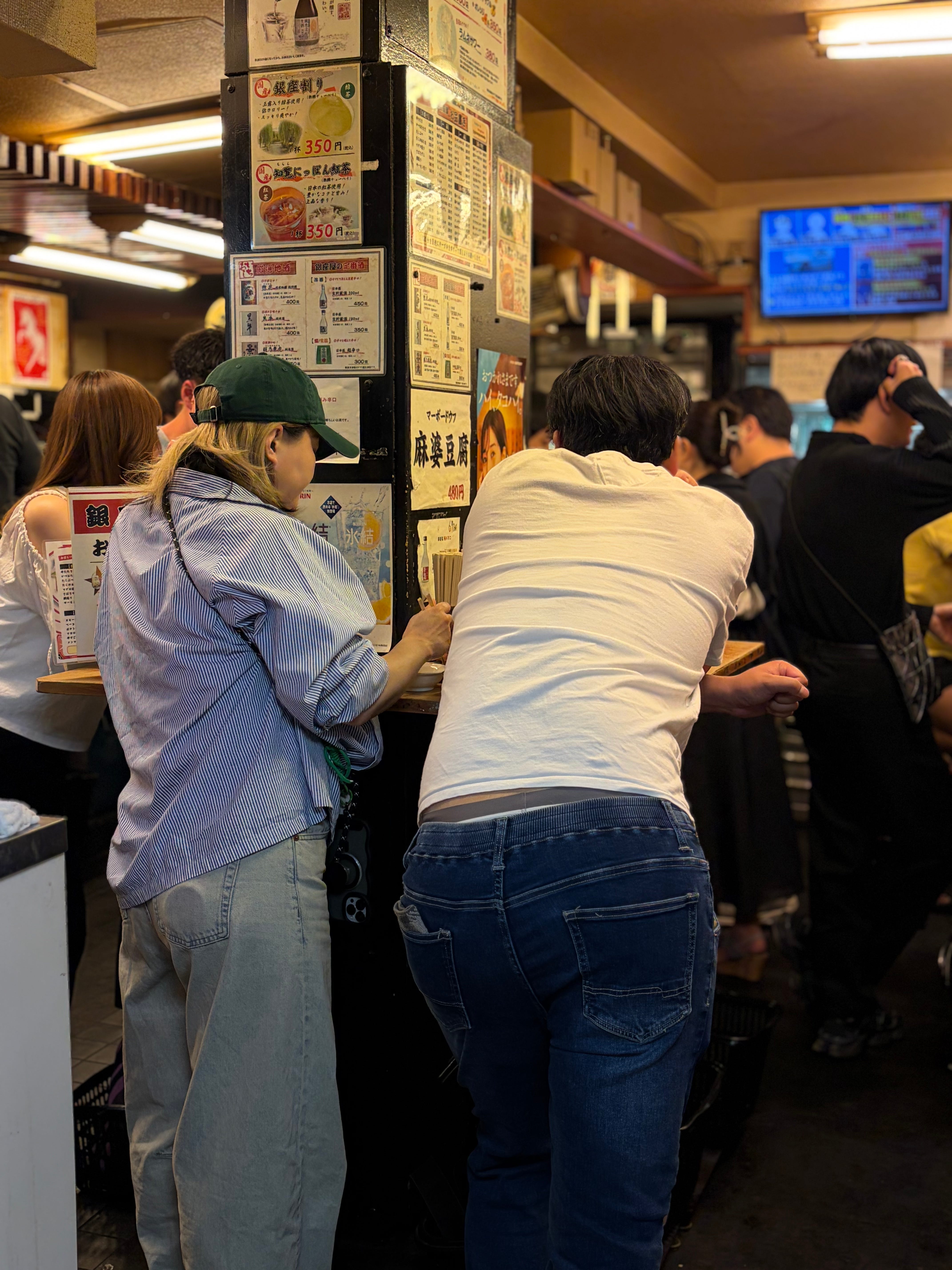
This time, I said nothing beyond my order. I stood at the counter for an hour and just watched. No izakaya taught me more.
Ginzaya sits two floors underground, in the B2 of the Osaka Ekimae Daiichi Building, a few minutes from Osaka Station, at the end of a run of corridors lined with noren curtains and handwritten menus. It is easy to get lost and hard to mind.
The basements explain themselves once you know the history. After the war, the land in front of the station filled with a black market, which hardened into an informal settlement that held its ground for two decades. Between 1970 and 1981 the city cleared it and raised four office towers in its place, the Ekimae Buildings, and many of the displaced shopkeepers were resettled underground, given space in the basements of the very towers that replaced them. The result is an inverted city: office floors stacked toward the sky, and below street level a low-ceilinged warren of tiny bars and lunch counters that never entirely stopped being a market.
Ginzaya is a tachinomi, a standing bar. No chairs, plastic shopping baskets under the tables for your bag, crates of Sapporo doubling as architecture. Beer comes cheap, most plates hover between 200 and 300 yen, and Osakans have a name for this kind of ritual: senbero, drinking and eating well for around a thousand yen.
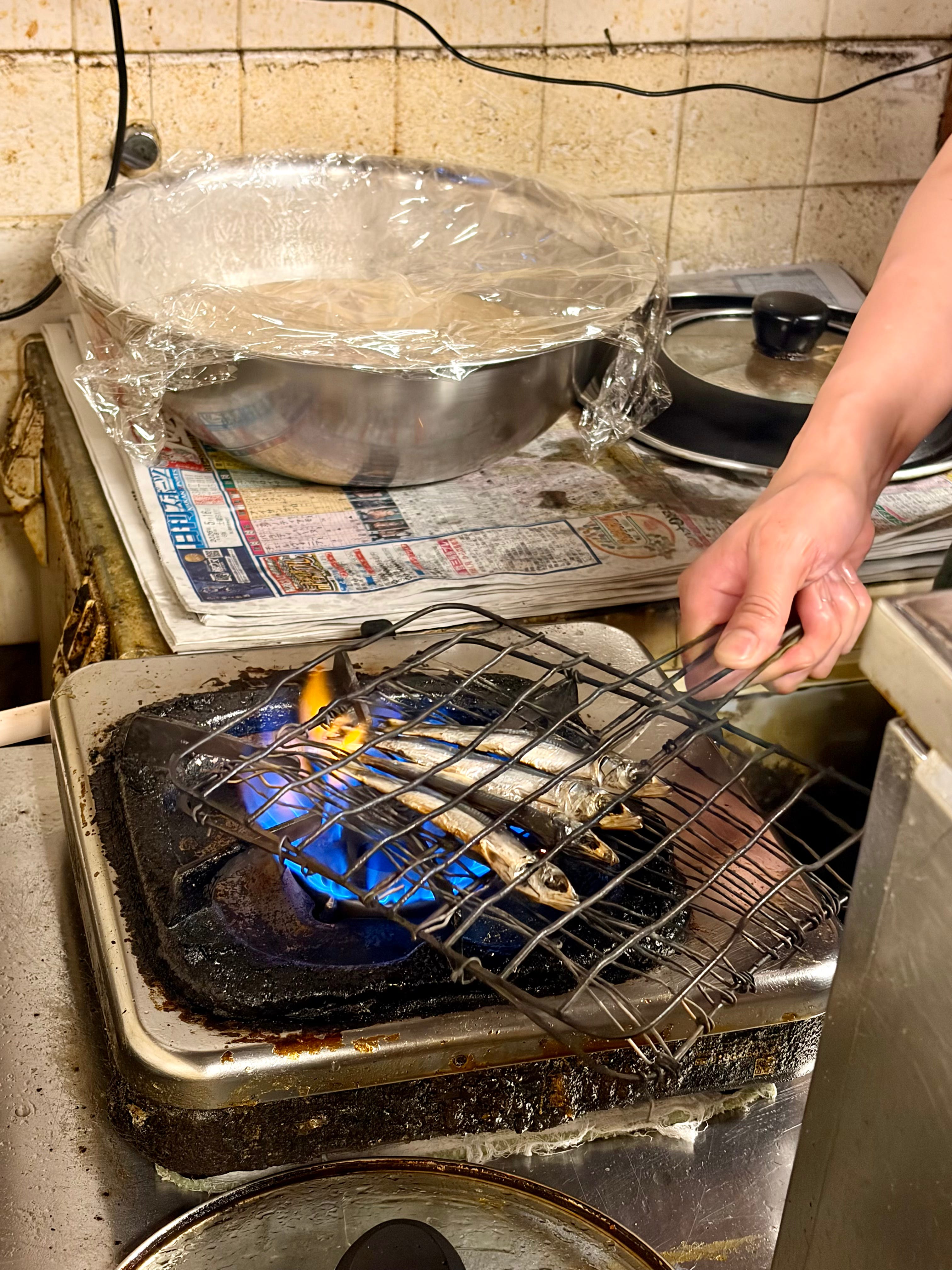
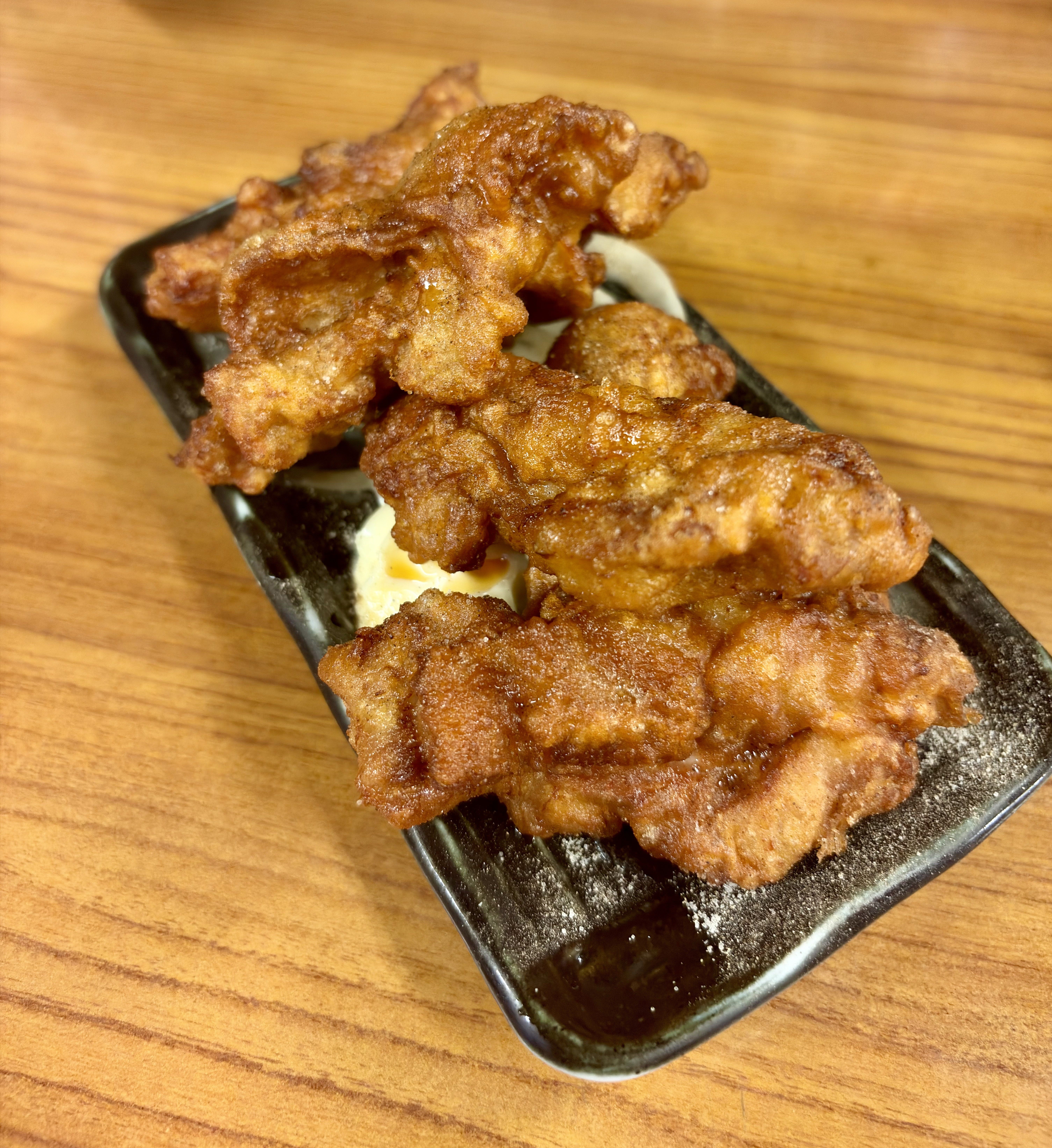
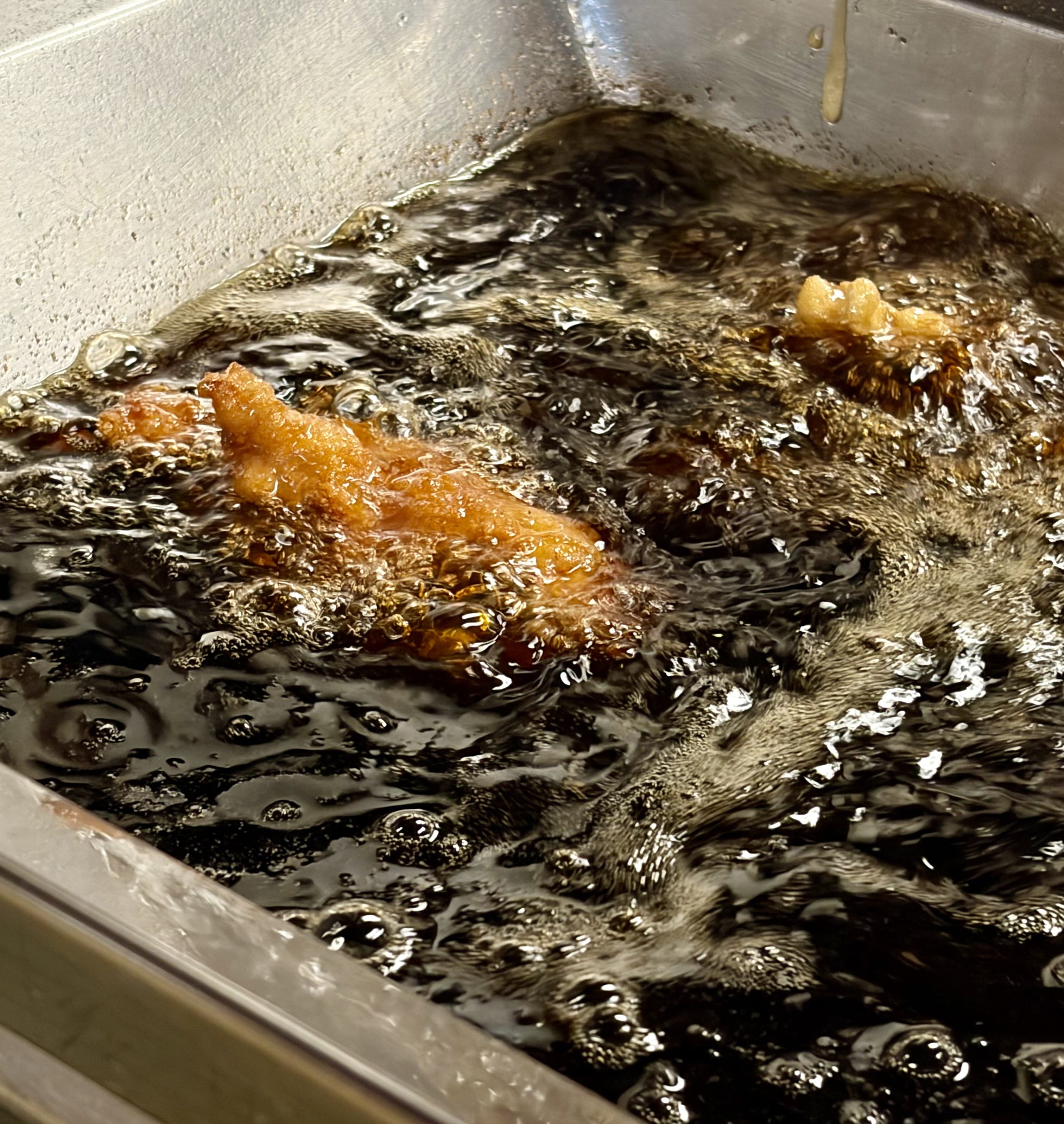
At these prices, the math works. The kitchen splits roughly in two, fried and raw, and I ordered from both sides of the divide. First the beef tataki the house is known for, seared at the edges, rare through the middle, the slices draped over a bed of onion shaved thin enough to read through and dressed in ponzu, the citrus cutting the fat of the beef and the bite of the raw onion at once. Then a bonito tataki, and a plate of karaage straight from the fryer. Around me, the kitchen kept producing for everyone else, shishamo blistering over an open flame, triangles of atsuage crisping in a cast-iron skillet, chicken livers arriving lacquered in a sweet soy glaze under a tangle of scallions.
The counter held a full cast. At the far right, an older man in a red cap worked through his snacks while they still steamed, never once looking up from his phone, directly beneath a sign asking customers to please refrain from using theirs. Whenever a hand came free, he lit another cigarette. Between us stood a young salaryman, no jacket, sleeves rolled, tie still knotted, alone with what looked like grilled sausage and a tall lemon sour. And closing the counter on my left, a man who had clearly been coming here for years. The staff smiled at him before he spoke. A nod, a half gesture, and his order was understood. Nobody needs a loyalty card when the regulars are part of the furniture.
Behind the pass, a woman with bangs ran the fry station and smiled the entire time, at the oysters, at the croquettes, at me. Of the whole staff she was the one who made a foreigner feel expected rather than tolerated. Orders moved through an older woman in glasses who seemed to be everywhere at once, plates stacked up her arm, eyes sweeping the room for the next raised hand. Every time I needed something, hers were the eyes I found. A third colleague shuffled between stations with a tired face and efficient hands, working the floor in slide sandals over white socks.
In the middle of the room, the standing tables belonged to the groups: young, loud, laughing without any of the hush that governs so much of Japanese public space. Near the door, a woman waited for her food holding a portable fan she seemed to have forgotten was in her hand. The whole place smelled of hot oil with an undertone of old cigarettes, which I mean as description, not complaint.
I climbed back up into Umeda a little after three. Above ground, Osaka was mid-rush, salarymen walking fast with somewhere to be. Two floors down, the clock kept telling a time nobody had asked for, and the man in the red cap, I assume, was lighting another cigarette.
I didn’t know why so many bars and restaurants were at basement level in Osaka — thanks for providing the history! I’m glad you had a great izakaya dinner, I’ve been turned down at a few in my travels to Japan as a foreigner.
Do you live in Japan?